What the World says

You need new clothes.

No I don’t. The 20 year old begging nightly at the grocery store parking lot for himself and his sister NEEDS food. 

“Your son deserves better than to breathe in dust.”

No he does not… or at least not more than any other kid who lives on the Rez.

“I want more for you.”

I don’t NEED more. I have enough.

“Your son shouldn’t have to see boarded up buildings on his daily walks.”

No. He should absolutely see poverty, lack of infrastructure, desolation. In showing him those, I will make clear to him the line between want and need. In showing him those, I can generate in him compassion, ingenuity, and a fierce devotion to the service of his brother. What greater deed could I accomplish as a mother? 

But, my rebuttals to what the world screams at me fall on deaf ears. The priorities I hold as a consequence of living where I live and seeing what I see cannot be understood except by those who also live what I live.

I try to explain. But to do so patiently, gently, without making myself a self righteous martyr, and without inflicting guilt or shame on the student is a skill I have far from perfected. Lord, have mercy on me. 

Stoic

Last week, I admitted a bright and painfully funny 13 year old female with a history of obesity and asthma to our pediatric service for a full body fungal rash that was bacterially superinfected. She needed constant skin care, but we were able to do that for her, and she improved quickly. Until… until she developed NEW abscesses in her groin and armpit for which we had very little explanation. She didn’t need an explanation though. The sores were terribly painful and that was her reality. She was started on different antibiotics and was seen by our surgical team so she could have the wounds drained in the operating room under anesthesia. At the request of the surgeon, she was allowed to only have clear liquids the day before surgery and then no food or drink for the morning of the procedure.

It was all status quo. Except… except that not once did she act upset. Never once was I on the receiving end of teenage attitude. For not a moment did the mother act annoyed with me or my team for making her daughter “hangry”. Their politeness and gratitude endured despite my serial exams of the girl’s very tender sores and despite me not letting her eat for nearly a day and a half. I thanked her. Then, I praised her mother for raising such a patient young woman. I commented that I haven’t met many teenagers who didn’t complain about not being able to eat for 36 hours. The girl said proudly, “It’s not as bad as that one time we all starved ourselves for a week.” Mom chuckled. I was intrigued and asked what made them all starve themselves for a week. “We didn’t have any money.”

I felt defeated. We had seemingly done so much to help this young girl. But in comparison to all she needed, I stood no chance. I had to fight every urge not to give mother my cell number and tell her to call me if that EVER happened again. Before I could slow the twenty simultaneous thoughts on how else I could help, I was shaken by their laughter. They giggled as they took turns telling the story: how they rationed the rice, how often they checked the bank account. I sat to listen. Then, I left dumbfounded and with only a hanging head and a prayer.

Lord help me:

  1. Look past what people look like. Even those who seem full can be starving.
  2. Laugh (or at least smile) even as I struggle.
  3. Have half the patience and grace of this young woman.

That’s Not Fair

(Authored October 2021)

We had just driven across the country in three days. We were ecstatic to arrive at our new home – the basecamp for our new adventure. Since we arrived on a Saturday, the Director of Hospital Housing was out of the office. But we were assured the key to our house would be left with the nursing supervisor. We excitedly pulled into the hospital parking lot, walked through the doors, and set out for the supervisor. The hospital, being one floor and less than two minute’s walk from end to end, was not difficult to navigate; we quickly found the office we needed. Greeted by a stunningly charismatic woman, we introduced ourselves and asked politely for our house key.  She put in a page to the housing officer on call and hurried off. Ten minutes passed, then thirty minutes, then sixty minutes passed before we were told to go get lunch and we would be called when our key was ready.   

Having only fast food options available, we settled on Sonic Burgers and a milkshake. I am seldom disappointed by a milkshake. Soon after, we were called back to the hospital and met a barrel chested and serious housing officer. He informed us our house was not yet ready – even though were arrived two days later than the day we had planned. In fact, our house was nowhere near ready. It had been used as a storage center for the last two years during the COVID pandemic and every room was filled to the brim with boxes. Before we could move in, the contents needed a new location, the gas, electricity, and water needed to be turned on, the walls needed painting, and the yard needed to be cleared of two year’s worth of weeds and shrubbery. We were disheartened, but we knew every part of this endeavor was going to require flexibility. We asked what we could do.  Even more disappointing was that we were told “nothing.” We technically didn’t have health insurance yet as we had not started our jobs, and the hospital could not be liable for any injury we sustained while doing maintenance on our rental house.

We were given the key to a “crash pad” trailer down the road that would be our home for the next few days. We were relieved that our belongings were still en route and that we did not need temporary storage. For three days, the housing crew worked round the clock to get our home in order. We were stunned at how quickly they worked to help people they did not know.  We felt exceptionally guilty – especially since we could contribute nothing. It was not the crew’s fault the house wasn’t ready. They didn’t know we were coming. As often happens here, the message was lost somewhere. And yet, they were working weekend and evening hours to make up for it. In the end, the house was finished just as our moving truck arrived and unpacking went seamlessly, but we felt an awful sense of unease – as if our presence had already made things worse.

Two weeks later, we received a bill – a bill for a pet violation/cleaning fee. As it turns out, dogs were not allowed in the crash pad trailers and because we had our beloved dog, Daisy, with us while awaiting our house completion, we had to pay the fee. My initial response was “THAT’S NOT FAIR! We wouldn’t have had to stay in the darn pet free tailer if they would have had our housing ready on time. We confirmed the date with the hospital long ago and listed that we were bringing our dog.” I began to rapidly compose an email. But by God’s grace, I paused. Was I really going to insist on fairness in this place? To a group of people that has been marginalized for decades? Was that the impression I wanted to create for myself on arrival here? Especially after my arrival and “need” for a home meant four people missed dinner and family time for three nights in a row with no extra compensation. No, no, and no. Absolutely not. I came here to insist on fairness for others, not myself. And in the process, I can only hope to gain grace, patience, and humility.

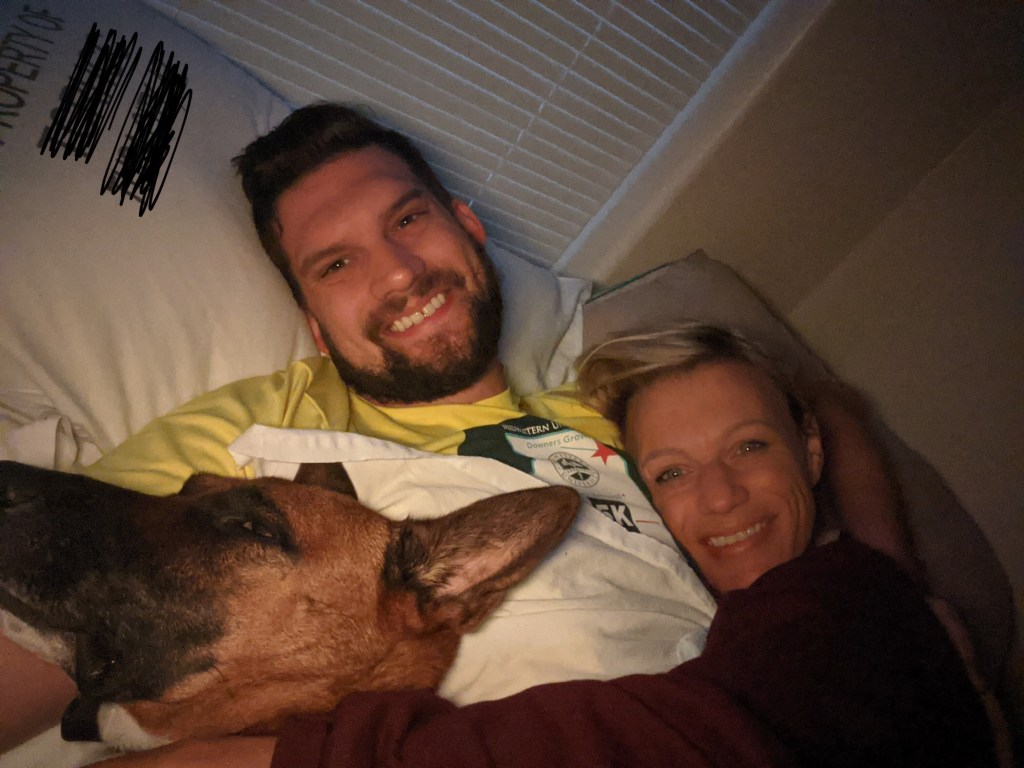
Todd, me, and Daisy snuggled in the twin bed of our temporary crash pad. Looking optimistic — ok, maybe not Daisy.

Detour

(IT HAS BEEN A WHILE — HERE’S WHY)

On April 6th,   2022, we welcomed Joshua Alexander to the world. He was born at 25 weeks gestation- which is three and a half months early. I was a teaching pediatric resuscitation class at the reservation hospital when my water broke. I waddled to the OB ward and STAT paged my husband there from his clinic. On his arrival, we confirmed what I had feared. Though I was not in labor (yet), my water had indeed broken. What little stoicism I possessed was now gone. I let out a cry from the depths of my soul feeling that all we had done to get us this far in the pregnancy, still was not enough.

Lucky for my sake, the nurses did not wait for me to compose myself before starting the process to give us every fighting chance they could. In minutes, I had two large bore peripheral IVs with fiery magnesium running through my veins. This was intended to prevent me from laboring and to protect Joshua’s still developing brain. I was given an intramuscular shot of steroids to assist his premature lungs and then I was slated for a helicopter ride to the nearest high risk obstetrical hospital in Phoenix (a 90 minute flight). In the blur of action, I was confused to see my personal OB – who was off that day- and friend walk through the door. She had driven 90 miles in what seemed like 60 minutes to meet me at the bedside and offer her hope and comfort before I flew out. If there was ever a reminder that medicine is so much more than a job, this was it.

The helicopter ride was so noisy that I had to text the nurses updates about how I was feeling – including once Joshua started making me contract. On landing, I was greeted by the OB hospitalist and a neonatologist. They wanted to tell me all that could happen if our baby was born that day: what his chance of living would be, and what his chance of illness would be.  I had heard the talk before. Heck, I had given the talk. The neonatologist pulled out a pocket card so I could see the statistics. After all this talk though, I don’t remember actually being asked if we wanted everything done to save Joshua. Maybe it was the look on our faces that said we at least needed a shot. Maybe in one moment, our eyes conveyed the culmination of loss we endured in the preceding years and that we desperately needed a reason to believe in miracles again.

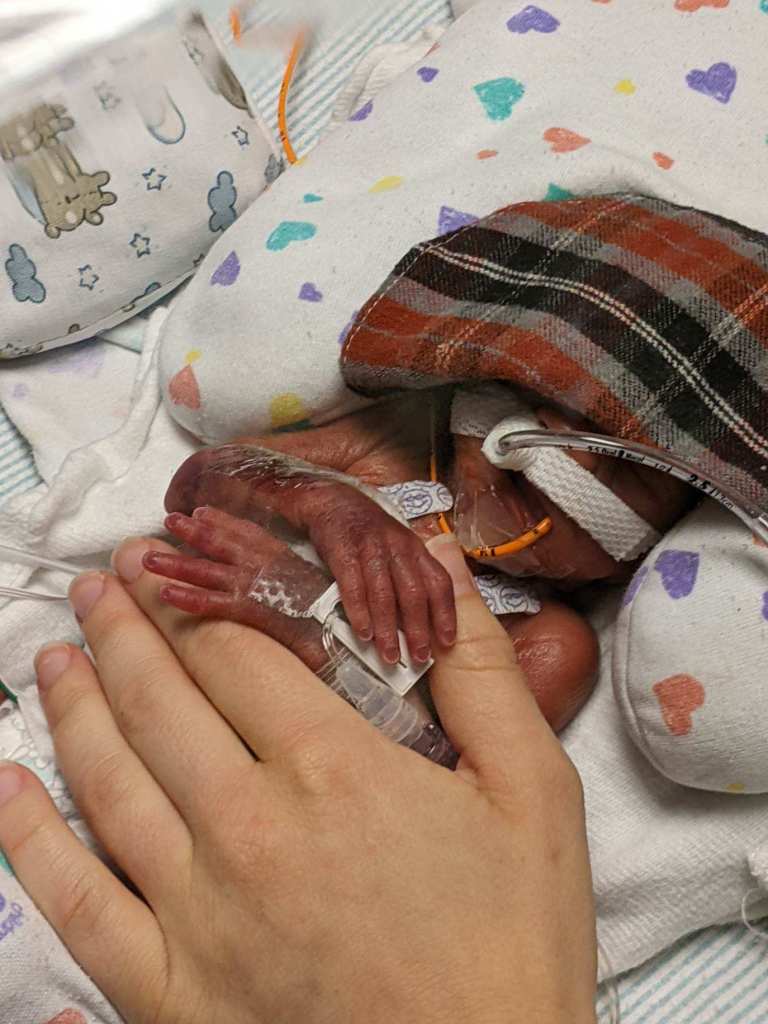
The following morning, Joshua was born via an urgent (but absolutely flawless C- section). He was 820g or 1lb and 13 oz. He was given a breathing tube and connected to a ventilator. The nurses placed a feeding tube in his mouth and he was started on IV antibiotics to treat any infection he might have. When we first saw him after the surgery, he could not open his eyes. Though in an incubator, we were able to touch him. As I took his hand and laid it in mine, perspective was granted. His entire hand was the size of one knuckle.

Over the next 115 days in the hospital with Joshua, my identities warred relentlessly: mom versus doctor. The neonatologist would say, “Just be his mom.” And in my head, I would scream, “Lullabies don’t fix heart defects.” and then think in despair, “And also, I have never been a mom – I don’t know how.” Yet, even while being more comfortable as a pediatrician, I struggled deeply to voice my concerns – afraid of traversing the hair strand that separates the invested, knowledgeable mother from the overbearing, and “difficult” parent.

In time, I accepted my dual citizenship. I saw my pediatric knowledge as my strongest asset to Joshua and so did his care team. Todd and I can say with certainty that we are better doctors because we have been patients. We have experienced the drowning fear and the exhausting uncertainty of sitting on the other side of a hospital bed. We know firsthand that nothing happens quickly enough in the care of your critically ill child, and also acknowledge that the doctors are doing their absolute best with what they are given. We know what it is like to bring a child home from the hospital – to be elated for their survival, but overwhelmed with their remaining needs.  We have needed to rearrange daily plans around pump feeds and we have argued to tears with supply companies for a reasonable number of oxygen tanks. But in every situation, we had enough to get us through.

Today, Joshua is 17 months old and entirely healthy. He needs neither oxygen, nor feeding tube. He has no eye or heart problems. He is talking, walking, and best of all ALWAYS (ok, almost always) happy. He is a living testament to not only the advances of medicine, but also the power of prayer, and the goodness of people.  We have in front of us a reason to be grateful each day and we simply cannot ask for more.

“This is my command to you, be strong and courageous. Do not be afraid. For the Lord, your God, is with you wherever you go.”  Joshua 1:9

Tabitha

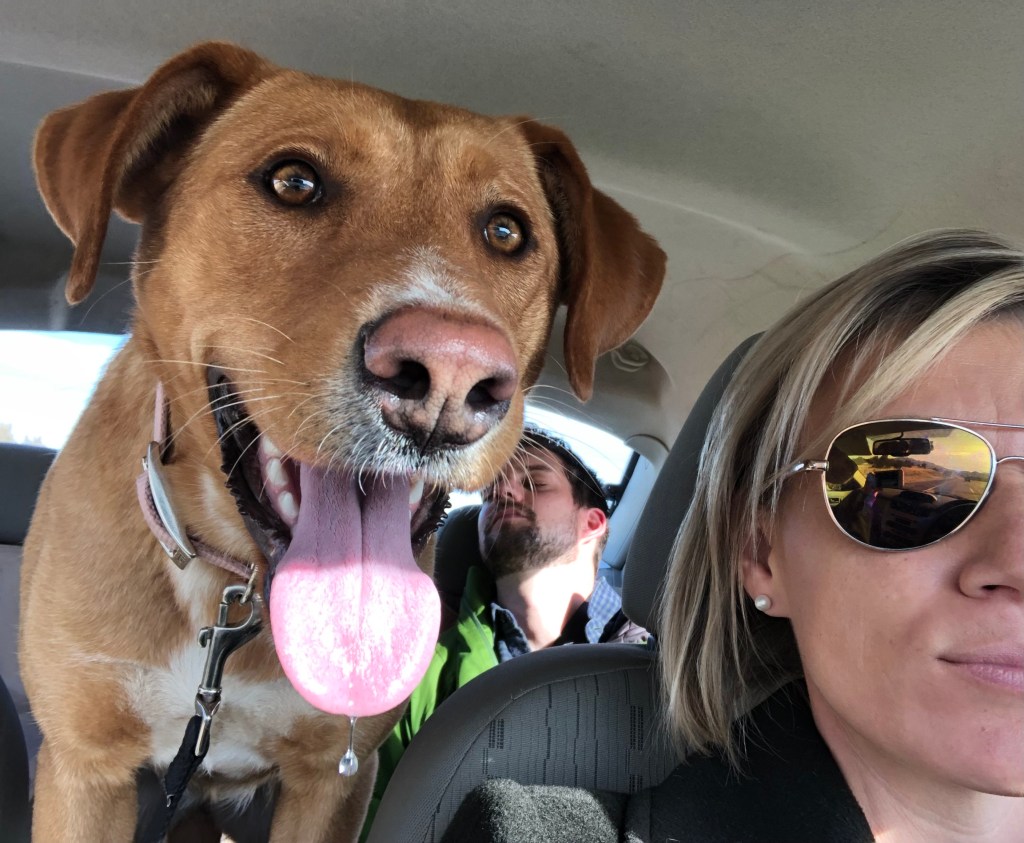
Hi everyone. My name is Tabitha… Don’t ask me… That’s just what my mom said she thought of for a name the moment she saw me. I’m making it work, and I anticipate it will be on the top ten list of puppy names by the year 2024.  I used to be a street dog – I prefer that term to “stray.” I say that because a dog can’t stray if it never had a place from whence to stray. I don’t now how old I am, but that’s the case for a decent amount of adults on Navajo Nation who don’t have clear birth records, so what’s the matter?

 I first met Todd and Ashley in early November 2021. I noticed they had a rather amicable and playful dog in the yard and we often played through the fence. One day, I must have looked particularly charming, because Todd asked Ashley if he could let me in to play with Daisy. You could tell Ashley was nervous – but hell, when isn’t she? Much to my appreciation, she acquiesced . Daisy and I hit it off! We chased each other, sniffed butts, dug holes in the sand, sniffed butts some more, and barked at those godforsaken goliath crows that perch themselves eerily on the fences and telephone wires throughout the Rez. I’m not used to sticking around one place for very long, so I said my goodbyes and went on my way.

…Only to come back the next day. This time, it was Ashley whom I schmoozed and she snuck me food and water. We went on this way for about a week. Then one day, (the day after Ashley and Todd just had their annual budget meeting, and remarked how much they were saving on pet care), Todd looked at Ashley with the Cheshire grin that he only wears when he’s itching to break with convention. The next thing I knew I was inside the house and had a collar on. Don’t get me wrong, I love the concept of a collar, but lordy are they uncomfortable for a free spirit such as myself.  The rest is pretty much history.

At first, I had no clue how to be a housedog, but I am forever indebted to Daisy who showed me the ropes. One of the first things she taught me is how to cross my legs when I lay down. And so now, I refuse to lay any other way. I feel like my life is the puppy version of the movie Pretty Woman. I am so sophisticated now! Shortly after that, I learned that voices from the TV aren’t actually intruders in the house. The first time that mom turned on the TV, I peed myself then jumped clear over the back of the couch to hide at the sound of Morgan Freeman’s voice. I’d like to think I’ve become an exceptional guard dog since then and I never hesitate to join Daisy at the window to bark at some questionably lurking character.

What mom and dad don’t know is that I put the word out on the Rez that they are complete softies. So, every now and then another street dog will come by and see if there’s room at the inn. We’re actually “fostering” one right now until we can find her a good home… that’s at least what mom keeps saying. Joke’s on them. I’m hoping to be a not infrequent guest writer here to give you another perspective on Rez life. But until next time, live by these words for guaranteed happiness, “If you can’t eat it, or play with it, simply pee on it and walk away.”

Yours truly,

Tabitha

P.S. In all seriousness, if anyone lives in the Flagstaff or Phoenix area and is interested in adopting a 4-5 mo uncannily affectionate female golden retriever mix, please message us using the website contact page. She gets along well with other dogs, and is in the process of house breaking.

Who will chop my wood?

I never intended for my first blog post to be negative or sarcastic – but I did know I wanted it to be honest. And so, the best I can hope for this time around is to find some positivity through this immodestly frank vent session. Today, I humbly confess the struggles I’ve had while living on the Rez, and how surprised I am at myself for struggling so soon.

Now that the luster of moving to a Reservation has worn off, and the sexiness of doing raw, underserved medicine is no longer novel, Todd and I are beginning to understand why life is so difficult for our patients. In four short months, we’ve had many a lesson on convenience – or should I say – inconvenience. Lessons that relentlessly and inarguably reveal that health is a luxury. But I will save the verbose detailing of just how social inequities lead to health disparities on Navajo Nation for another time.

Let’s start by painting the picture of Christmas Day, 2021. It is the first time in four years my husband and I are off together for the holiday.  We wake mid-morning to snuggles from two furry and affectionate dogs – Daisy and Tabitha. The cool hallway tiles suggest it’s colder than usual outside, but the sun still shines brilliantly through the sheer curtains overlying the frontroom window. In our PJs and sleep hair, we let the dogs out, wave to the neighbor (an ED doc), and then walk to the kitchen to fill the dog bowls. Only there, I am met by the surprising and undeniable smell of propane gas. Fortunately, we were able to have someone investigate the next day and the leak was found and repaired within a matter of minutes. Problem solved. Except nothing is that easy on the Rez. One problem here invariably begets at least one other problem.  

You see, following the leak, our propane tank was down to 10% capacity. Normally, we are supposed to order a replacement when the tank is 30% full for no other reason than it takes that long to deliver propane on the Reservation. I hop on my phone to order a replacement. But the internet is out – not because of a sandstorm or rain shower like usual, but just because it is the middle of nowhere Arizona and the internet can go out whenever it damn well pleases. The next day, we place our order. While awaiting the replacement delivery, we turn down the heat and start whipping up crockpot meals to avoid using the oven. But our efforts weren’t enough. We ran out of propane a week later, and spent the next ten days wearing snow pants inside, sleeping in double layers, and cooking in the microwave. Amidst other daily inconveniences like the nearest vet being 90 minutes away, a grocery store that is frequently out of items like yogurt, cheese, and fruit, while also having infuriatingly long lines, and us being outside the service area for any major appliance repair, I started to wonder if I was really cut out for life here. Even more unnerving was that I began to sincerely question how the hell I’d ever endure what I thought for so long was my dream job – a position with Medecins Sans Frontieres as a pediatric intensivist in a Lebanese refugee camp.

But just as I have learned to live with the conveniences of being White in middle to upper class neighborhoods, I am confident I can learn to live without them. Our short stint without heat or internet was just a taste of what most of our patients endure regularly. You see, it’s not uncommon for many people here to still heat their homes with wooden stoves – with wood they find and chop themselves. Not long before Christmas, I met a teenage boy in clinic after he sustained a shoulder injury. He presented to clinic alone as his parents traveled for work and he had been caring for himself while they were away. He was happy with the care plan I came up with… Except… Except then, he bravely and honestly asked, “Who will chop my wood?”

I pursed my lips hard and exhaled loudly through my nose. I can’t write a prescription for a wood chopper. And lordy, if I went over to chop the wood for him, we’d probably both freeze before I made any substantial progress. In a moment, I not only recognized how fragile stability is here, but was also humbled at my relative inferiority to the size of problems my patients and coworkers face.

Undoubtedly, I am already indebted to my patients. Though painful at times, I am thankful for how graciously but unapologetically they illuminate my flaws and shortcomings. I value beyond words their patience with me as I try to help them while also navigating a health care system and culture vastly different from anything I have ever experienced. I stand in awe at their quiet resilience and appreciate how it forces me to continuously reevaluate my perspective.  It’s because of my patients that I can see all I still have. What I have here is community as it should be – colleagues who let us use their washing machine when ours breaks, neighbors who offer their spare bedrooms when our heat is out, and mere acquaintances who take in our dogs when an unexpected medical problem meant an overnight stay at a hospital in Phoenix. And so, while I may not have a regular supply of Feta cheese, here on the Rez I have people who help carry my struggles. I have warm clothes to layer, money to buy an extra space heater, and friends who let me use their last two cans of coconut milk because the grocery store is out. Best of all, I have a loving husband with whom I can laugh at these moments and share in the growing pains. And all of that my friends, is enough for me.